

2024 saw our team embark on a particularly intricate project in the coastal town of Bexhill, West Sussex. Our client tasked us with the installation of a Digital 48 sheet in an environment that presented a unique set of challenges.
The proposed location was a narrow strip of land situated halfway up a steep railway embankment, immediately adjacent to a busy main road. Adding to the complexity were stringent restrictions imposed by Network Rail engineers, notably the prohibition of any excavation into the embankment.

This immediately ruled out our standard approach of a robust 6m x 2m x 1m concrete base. Instead, we were instructed to utilise pile caps. The steep and uneven terrain, sloping both front-to-back and side-to-side, further complicated matters, requiring the use of unusually long 6m pile caps. This pushed us beyond our typical methodologies, but our team embraced the challenge with focused determination, underpinned by thorough pre-planning.

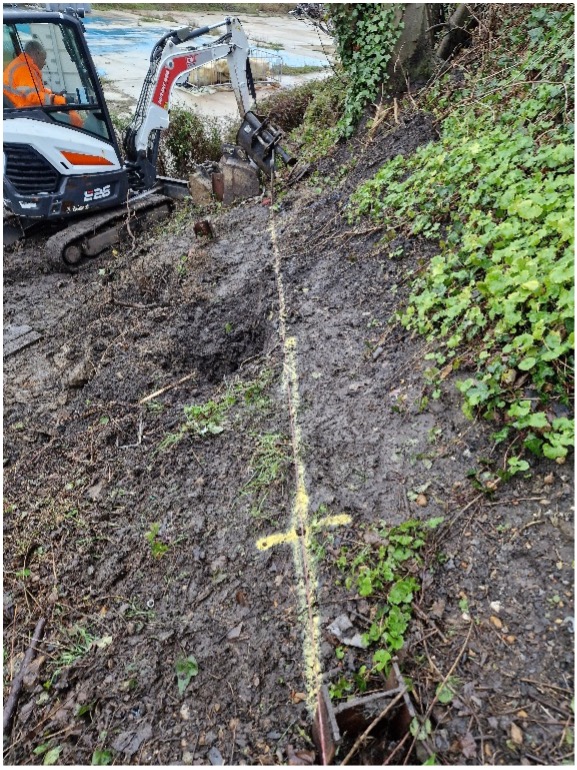
Our initial priority was establishing a secure working platform at the base of the embankment. This necessitated careful traffic management, the deployment of a Hiab crane, and the delivery and placement of several tonnes of Type 1 aggregate to create a stable foundation for a 5-tonne digger – the largest piece of machinery that could safely operate within the confined space.
The next critical step involved using a crane to lift the mini digger onto the embankment. This enabled us to create a safe and level area from which to operate the core pile drivers.
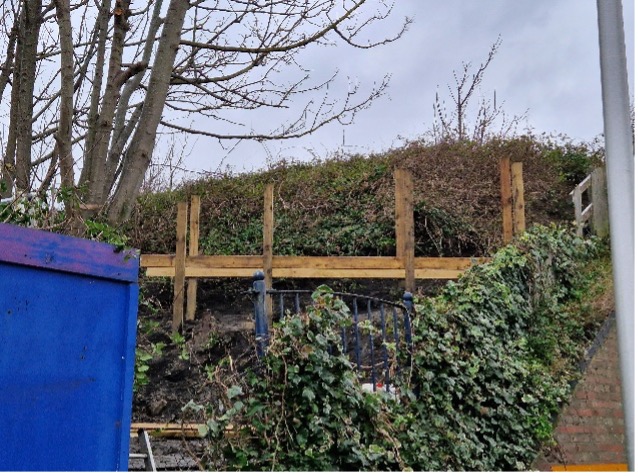
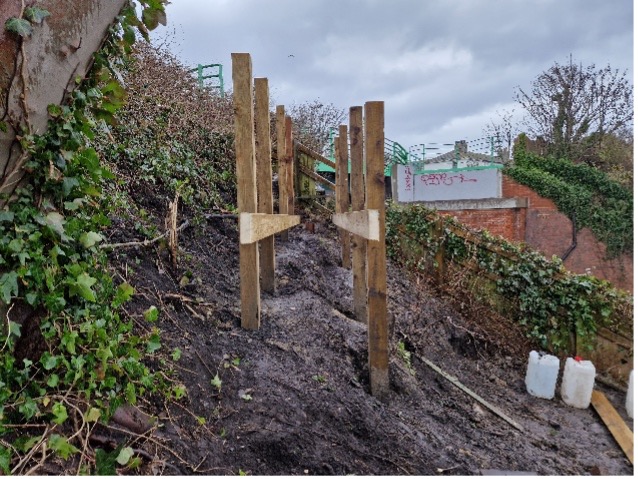
A key consideration was maintaining the precise level and alignment of the pile caps. Even a minor deviation at this stage could compound as the structure was built upwards, potentially leading to significant issues with the steelwork’s level. To address this, our team devised an ingenious solution: the construction of a bespoke timber jig. This served a dual purpose, accurately marking out the drilling locations and ensuring the pile caps remained perfectly level and securely in place.

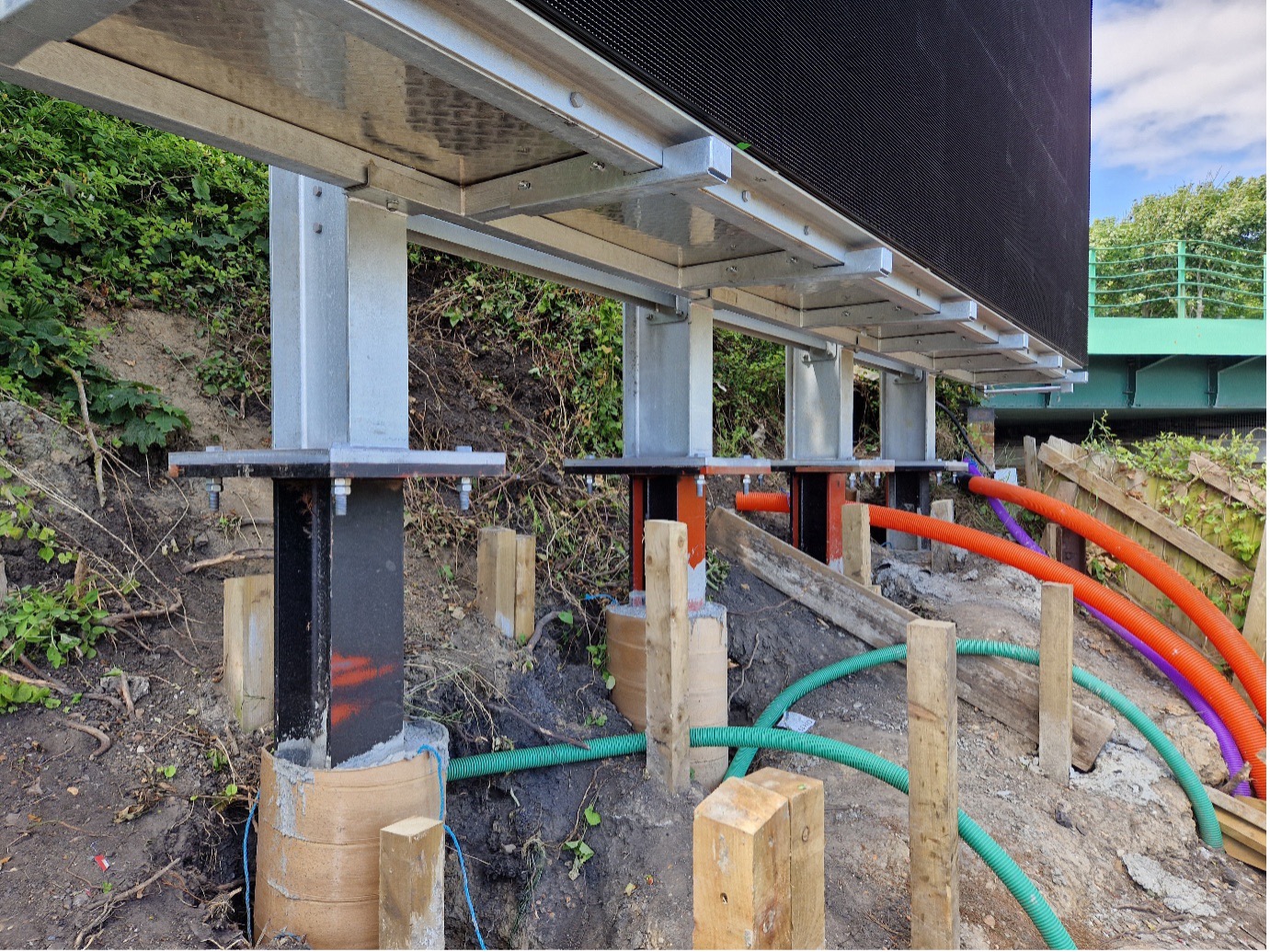

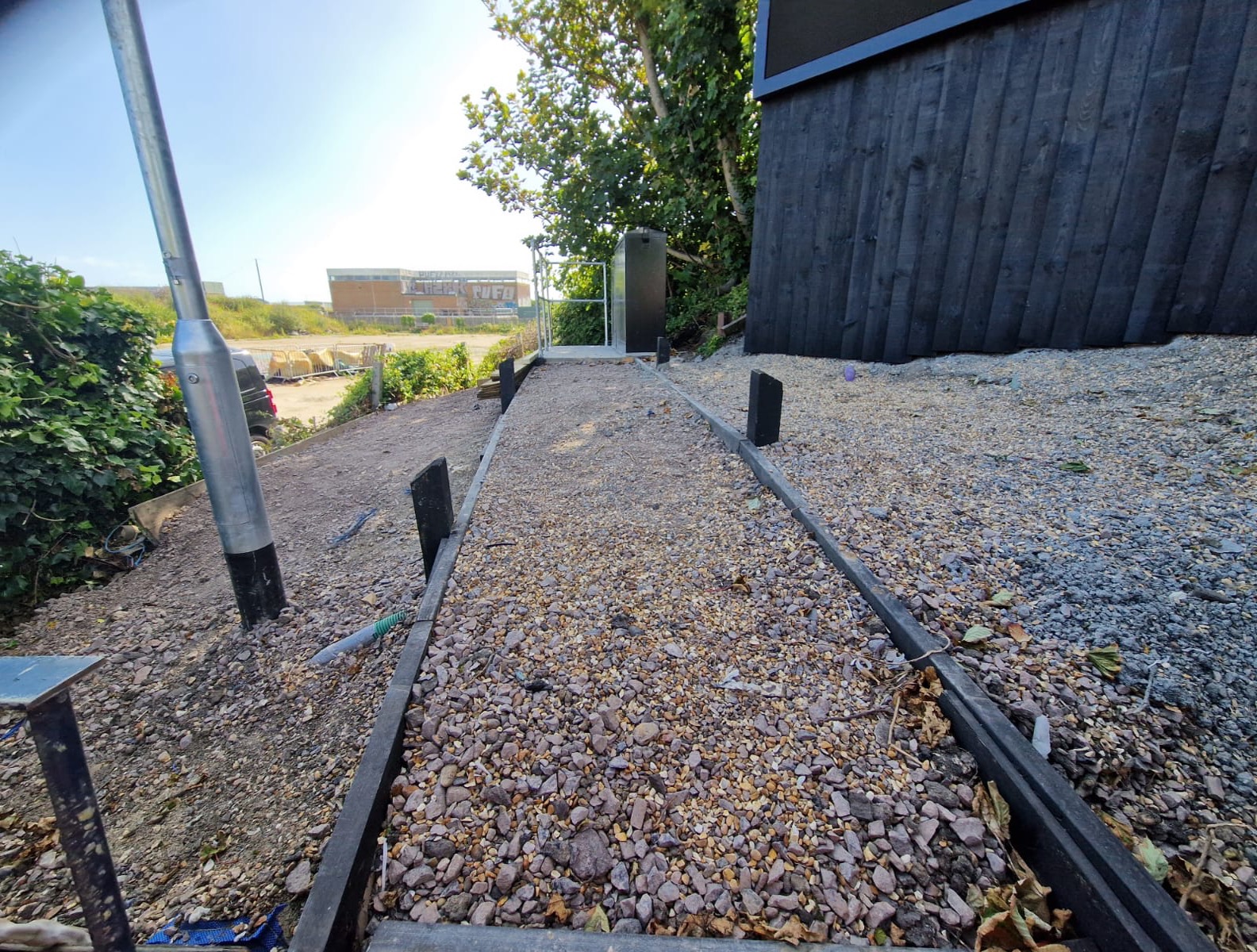

The key take-aways for us were that this project highlights the team’s ability to overcome substantial logistical and regulatory hurdles through careful planning, innovative solutions, and a focus on safety and efficiency, ultimately delivering a successful digital signage installation for a key client.